

Introduction
For decades, international property ownership has been exclusive, — requiring significant capital, local access, and the ability to navigate complex foreign regulations.
That model is changing.
Today, equity share real estate is redefining global property investment. Instead of purchasing an entire asset, investors can now own a legally recognised share of premium international property.
Equity Share ownership isn’t just about affordability. It’s about access, diversification, and timing.
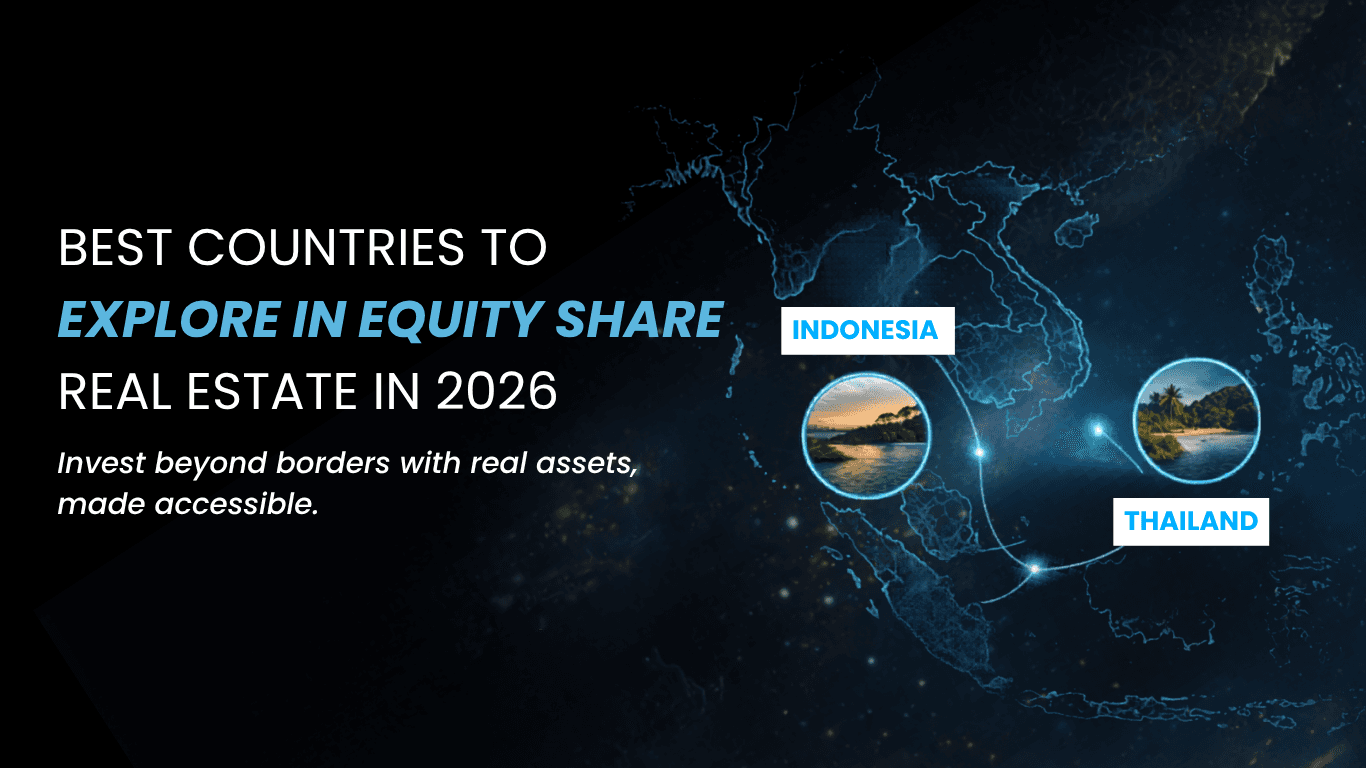
By the end of this guide, you’ll understand the best countries to own property in 2026, and more importantly, where the real opportunities are emerging before the market catches on.
What is equity share real estate?
Equity share real estate allows multiple investors to co-own a property through a structured legal model. Each investor holds a proportional share and earns returns through rental income and capital appreciation.
Why 2026 is a pivotal year
Equity Share is becoming globally accepted.
Regulations are evolving to support structured ownership models.
Market corrections are opening new entry points.
At HCF Estate, we curate equity share opportunities across high-growth markets — focusing on legal clarity, strong yields, and early-stage positioning.
What Makes a Country Ideal for Equity Share Real Estate Investors?
When evaluating property investment opportunities across international residential real estate, the best markets consistently align on a few critical factors :
Rental Yield Potential
Consistent income generation driven by tourism or urban demand.Capital Appreciation Outlook
Strong growth potential over the next 3–5 years.Legal Accessibility
Clear pathways for foreign investors through structured ownership.Entry Cost per Equity Share
Accessible investment thresholds without compromising asset quality.Tourism & Rental Demand
High occupancy rates and strong short-term rental ecosystems.Economic & Currency Stability
Reduced long-term volatility.Exit Liquidity
Ability to resell or exit efficiently through platform ecosystems.
Thailand, Chumphon — Thailand’s Undiscovered Coastal Entry Point

Thailand has always been a strong real estate market but the smartest opportunities are no longer in the obvious cities.
They’re earlier.
The ownership challenge
A key question remains: can foreigners buy property in Thailand?
While certain property types are accessible, direct land ownership is restricted. Without the right structure, this creates legal and operational complexity.
The equity share advantage
Equity share models provide clean, structured exposure to Thai residential real estate, removing traditional ownership barriers while maintaining investment upside.
Why Chumphon is emerging
Chumphon is quietly becoming one of Thailand’s most interesting coastal markets :
Strategic gateway to southern islands.
Untouched coastline and natural landscapes.
Low-density development with significant room for growth.
Entry prices far below Phuket or Koh Samui.
This is not a saturated destination, it’s an early-stage market with expansion potential.
Demand drivers
Growing domestic tourism and regional connectivity.
Spillover demand from crowded Thai hotspots.
Shift toward quieter, experience-led travel.
Performance outlook
Rental yields: ~5–7% in emerging coastal zones.
Capital appreciation: Strong upside due to early positioning.
Entry advantage: Lower equity share entry compared to major Thai markets.
Risks to consider
Slower liquidity in the short term.
Infrastructure still developing.
Requires structured ownership for legal clarity.
Indonesia, Lombok The Next Bali for Equity Share Investors
If Bali represents a mature market, Lombok represents what comes next.
This is where timing becomes the strategy.
The legal reality
Foreigners cannot directly own freehold land in Indonesia,making structured ownership not just beneficial, but essential.
Equity share real estate provides the most efficient route to access this market.
Why Lombok is rising
Lombok is being positioned as Indonesia’s next major tourism and investment hub :
Mandalika Special Economic Zone driving global infrastructure and events.
Expanding international connectivity.
Cleaner, less congested alternative to Bali.
As Bali becomes saturated, Lombok is absorbing next-wave demand, without the pricing pressure.
Demand drivers
Rapid tourism growth across luxury, surf, and eco segments.
Increasing global interest in wellness and remote living.
Longer average stays compared to traditional destinations.
Performance snapshot
Rental yields: ~8–12% in prime villa zones.
Entry cost: Significantly lower than Bali.
Capital upside: High due to early-stage development.
Strategic advantage
This is not just a location, it’s a positioning play.
Early investors benefit from:
Lower acquisition costs.
Rising global visibility.
Infrastructure-led appreciation.
Risks to consider
Early-stage execution risks.
Lower short-term liquidity.
Importance of strong due diligence.
Country Comparison: Where Should You Invest in 2026?
Country | Avg. Gross Yield | Min. Equity Share Entry | Legal Framework | Best For | |
Portugal | 4–6% | Medium | Foreign-friendly freehold | Stability + EU access | |
Dubai | 5–7% | Medium | Strong investor protections | Tax efficiency + luxury market | |
Thailand (Chumphon) | 5–7% | Low–Medium | Restricted ownership, structured access needed | Early coastal growth | |
Indonesia (Lombok) | 8–12% | Low | No direct ownership, structured models required | High yield + early positioning | |
Spain | 4–7% | Medium | Transparent and regulated | Long-term appreciation + tourism |
How to Get Started with HCF Estate
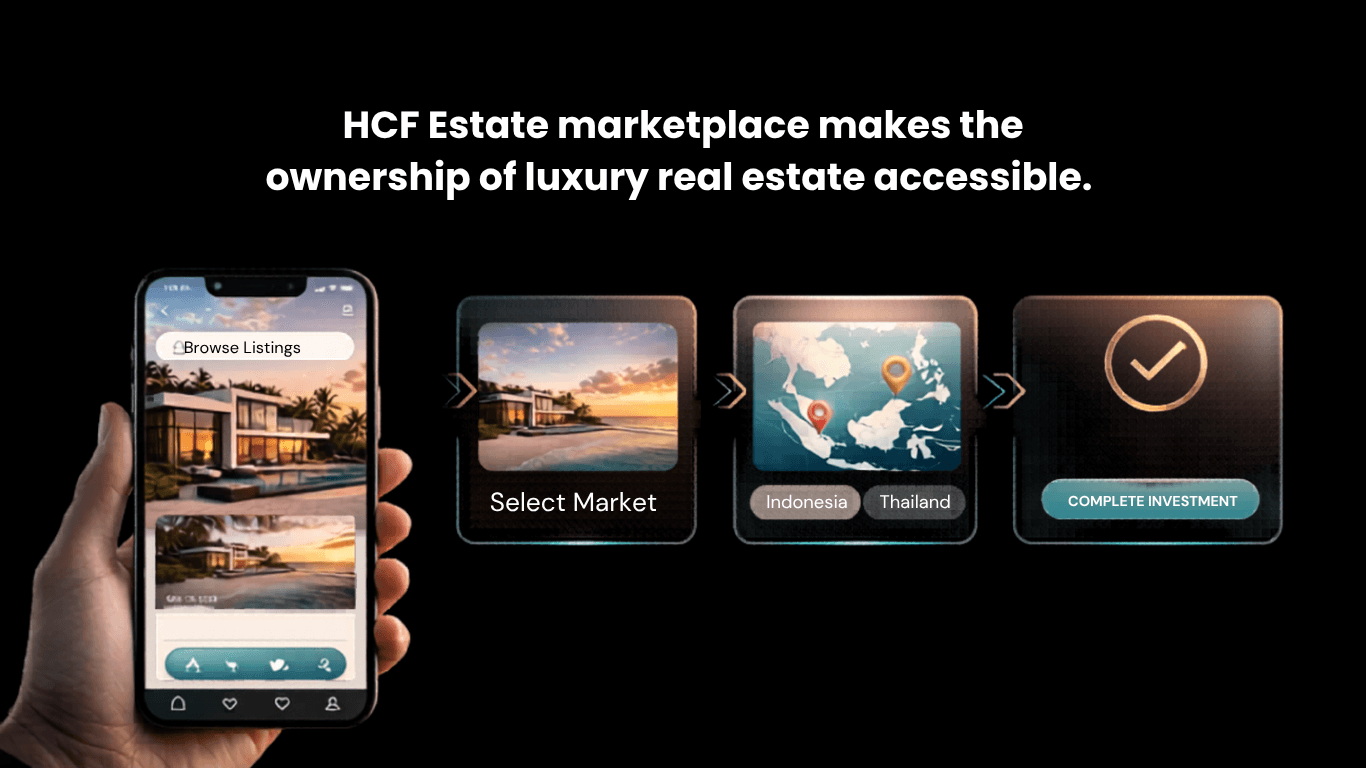
HCF Estate transforms global property investment into a structured, accessible experience.
You’re not navigating international markets alone, you’re entering a curated ecosystem built for clarity, performance, and long-term value.
The process
Browse global property listings.
Select your preferred market.
Choose your equity share size.
Complete your investment.
Each opportunity includes :
Verified legal structures.
Thorough due diligence.
Transparent performance data.
Explore equity share properties on HCF Estate (website marketplace).
What is the minimum investment for equity share real estate?
Minimum investment varies by platform and property, but equity share models are designed to significantly reduce entry barriers compared to traditional real estate.
Is equity share property investment legal for foreigners?
Yes, when structured correctly. Platforms like HCF Estate ensure compliance with local regulations while enabling foreign participation.
How do I receive rental income?
Rental income is distributed proportionally based on your ownership share, typically through managed payouts.
Can NRIs invest in equity share real estate abroad?
Yes, NRIs can invest in international markets through structured platforms, subject to applicable financial and regulatory guidelines.
What happens when I want to exit my investment?
Exit options may include selling your share within the platform ecosystem or during asset-level exits, depending on the structure.