

When restraint becomes an advantage
For years, luxury real estate followed visibility. Prime beaches. Famous names. Established resort belts. Markets where demand was already proven and attention was guaranteed.
That logic is beginning to reverse.
As saturated coastal destinations mature, they bring with them predictable challenges: yield compression, overdevelopment, rising operating costs, and a gradual loss of distinctiveness. What once felt exclusive often becomes standardized.
In contrast, secondary coastal markets are quietly gaining ground.
Not because they are undiscovered, but because they are less exhausted.
Why saturation erodes luxury
In highly developed resort hubs, luxury competes with volume. As inventory increases, differentiation narrows. Design becomes formulaic. Experiences become transactional. Returns become increasingly sensitive to seasonality and pricing pressure.
From an investment perspective, saturation introduces structural risks:
compressed yields driven by oversupply
higher maintenance and operating costs
dependency on short-term tourism cycles
limited scope for meaningful design innovation
Luxury in these environments relies heavily on branding and marketing to sustain appeal.
That model is proving fragile.
The appeal of secondary coastal markets
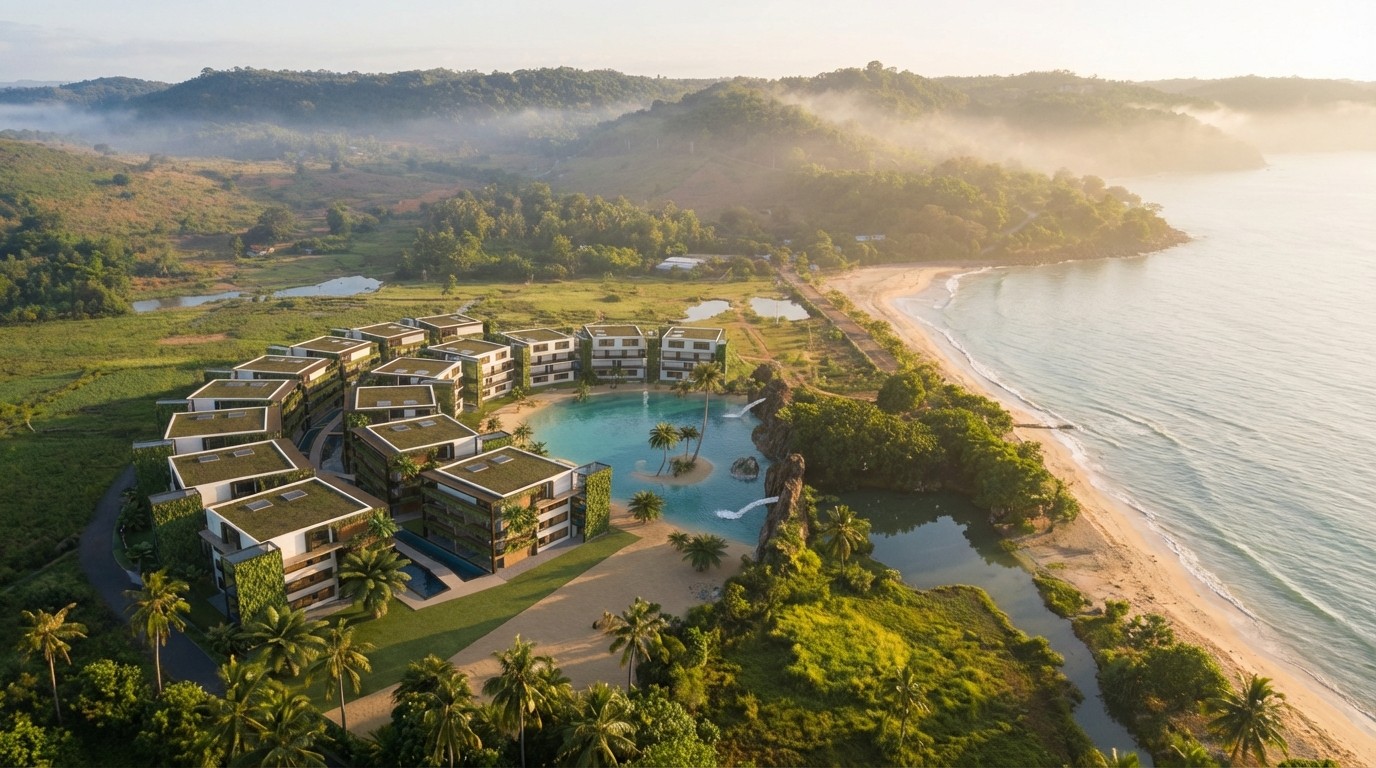
Secondary coastal destinations offer a different proposition. They tend to grow at a more measured pace, shaped by domestic tourism, infrastructure rollout, and lifestyle migration rather than mass international demand alone.
These markets often provide:
rational entry pricing before speculative inflation
natural limits on density, protecting long-term character
domestic tourism resilience, smoothing demand cycles
compatibility with boutique formats, where quality matters more than scale
In these environments, luxury can remain intimate, intentional, and livable.
Quiet luxury as a response, not a trend
Quiet luxury is not a stylistic preference. It is a response to fatigue.
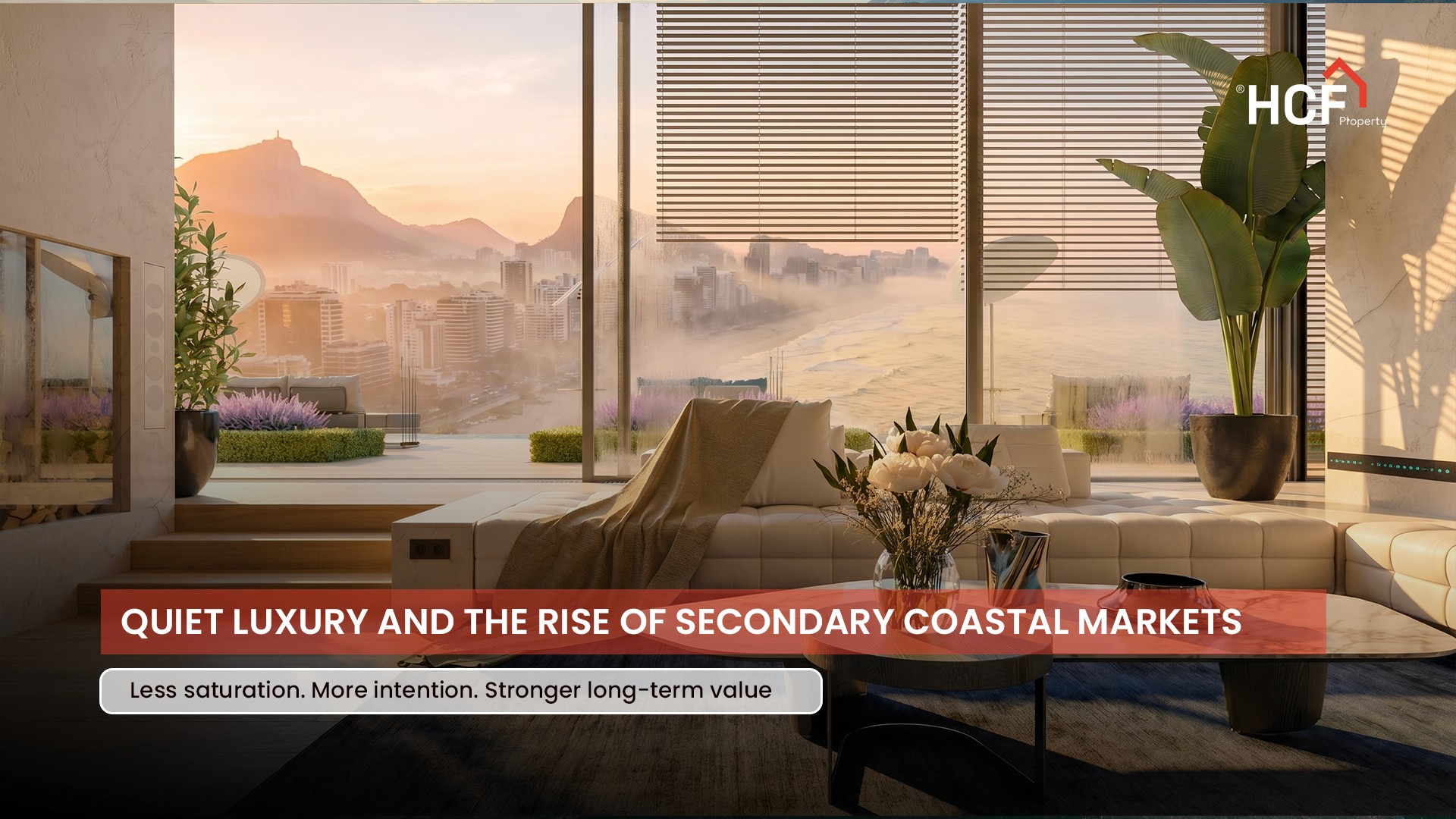
Buyers are increasingly drawn to places that feel calm rather than performative. Developments that prioritize space, materials, light, and integration with landscape over spectacle. Locations where privacy is preserved because growth has been deliberate, not rushed.
In secondary coastal markets, this approach feels natural rather than forced. The setting itself supports restraint.
Reflecting on this trend:
“The quietest markets often reward patience the most.”
Richard Dimechele, Founder & CEO, HCF Property
Durability over attention
From a long-term ownership perspective, quiet luxury tends to age better.
Assets in less saturated coastal regions often benefit from slower but steadier appreciation, stronger repeat visitation, and lower reputational volatility. They are less dependent on constant reinvention and more anchored in place.
Importantly, these markets also give developers room to build responsibly. Lower density, better environmental integration, and longer planning horizons are not just possible, they are expected.
Key takeaway:
Quiet luxury prioritizes durability over visibility. As coastal real estate moves into its next phase, secondary destinations are emerging not as alternatives to prime markets, but as their natural evolution.
Sources & References
Bank of Thailand, Tourism Indicators
STR Global, Resort Performance Data
Euromonitor, Travel & Lodging Trends
Author
Romer Tasedo
Brand Lead Manager, HCF PROPERTY