

When signals begin to converge
As the real estate market moves toward 2026 and beyond, a clear pattern is forming. Across global outlooks, regional data, and investor behavior, the signals are no longer fragmented. They are converging.
Not around speed.
Not around scale.
But around standards.
Three forces now consistently shape long-term performance:
Governance and transparency
Sustainability and resilience
Livability anchored in real demand
Together, they define a new baseline for what “luxury” actually means in the decade ahead.
Governance as the foundation of value
The next phase of real estate will reward developers who treat governance as infrastructure, not administration.
Clear ownership structures, conservative leverage, realistic timelines, and documented decision-making are no longer institutional preferences. They are investor expectations.
In cross-border markets especially, governance has become the first filter through which capital moves. Developers who cannot clearly explain how decisions are made, risks are managed, and assets are protected are increasingly sidelined, regardless of how attractive the location may appear.
Trust, once lost, now compounds negatively.
Livability as the true demand driver
The strongest real estate assets of the next decade will not rely solely on visitor numbers. They will be shaped by repeat usage, emotional connection, and long-term relevance.
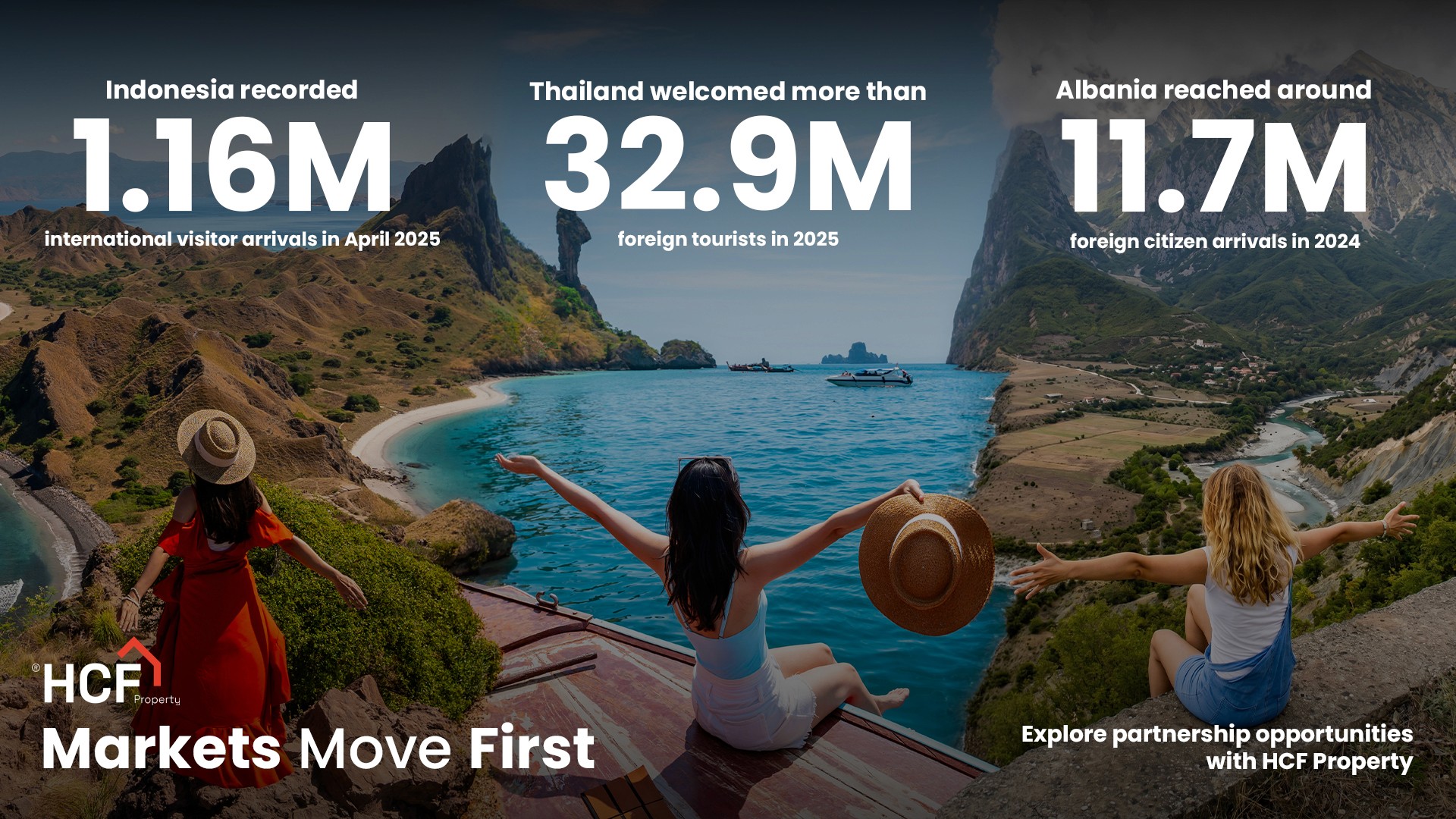
Tourism remains a structural tailwind. Data from UN Tourism continues to show sustained recovery and growth, while Europe offers a telling case study. Destinations such as Albania have recorded double-digit year-on-year growth in foreign arrivals, demonstrating how quickly markets can re-rate when accessibility, governance, and lifestyle alignment come together.
But demand that lasts is rarely accidental. It emerges where places are designed to be returned to, not just visited once.
Livability is no longer separate from investment logic. It is central to it.
Luxury, redefined
Luxury in the coming decade will look quieter. Less performative. More considered.
It will be defined by space rather than excess, by material integrity rather than novelty, and by coherence rather than scale. Developments that age well, operate efficiently, and respect their surroundings will increasingly outperform those built for immediate attention.
This shift is not ideological. It is pragmatic.
“Real estate built with integrity will always outlast the market cycle.”
Richard Dimechele, Founder & CEO, HCF Property
From expansion to standards
Over the course of this series, one idea has surfaced repeatedly. The industry is moving away from expansion as a primary signal of success and toward standards as the true measure of quality.
Grounded value is no longer philosophical. It is strategic.
It informs where developers build, how they structure ownership, what they prioritize in design, and how they think about time.
The next decade will not reward those who move the fastest. It will reward those who move with clarity.
Final insight
Luxury with logic is not a compromise. It is the future of real estate that endures.
Sources & References
UN Tourism, World Tourism Barometer
INSTAT Albania, Tourism Statistics
PwC, Global Real Estate Outlook
For much of modern real estate history, nature was treated as a backdrop. A view. An amenity. A selling point added after the fundamentals were decided. That hierarchy has shifted.
As global buyers become more selective, nature is no longer peripheral to luxury real estate. It has moved to the center of how value is assessed, protected, and sustained. In many emerging markets, it is now one of the most critical long-term assets a development can hold.
Author
Romer Tasedo
Brand Lead Manager, HCF PROPERTY